Bank auction properties can offer attractive investment opportunities and lower purchase prices compared to regular market properties. However, many buyers enter auctions without fully understanding the risks involved.
While bank auction properties are legally auctioned by banks and financial institutions, buyers must still perform proper due diligence before participating. Ignoring important checks can lead to legal disputes, financial losses, or possession-related problems.
Understanding the major risks involved can help buyers make informed decisions and avoid costly mistakes.
1. Legal Disputes and Title Issues
One of the biggest risks in bank auction properties is incomplete legal verification.
Even though banks auction the property to recover unpaid loans, buyers should independently verify:
- Ownership history
- Pending court cases
- Encumbrances
- Property title clarity
- Local authority approvals
Some buyers wrongly assume that bank auctions automatically guarantee clean legal status. That assumption can create serious future problems.
Consulting a legal expert before bidding is strongly recommended.
2. Possession Problems
In some cases, auction properties may still be occupied by:
- Previous owners
- Tenants
- Unauthorized occupants
Physical possession is not always immediately available after purchase.
Buyers should carefully review:
- Possession notice
- Occupancy status
- Auction terms
If possession is disputed, legal proceedings may take time and increase costs.
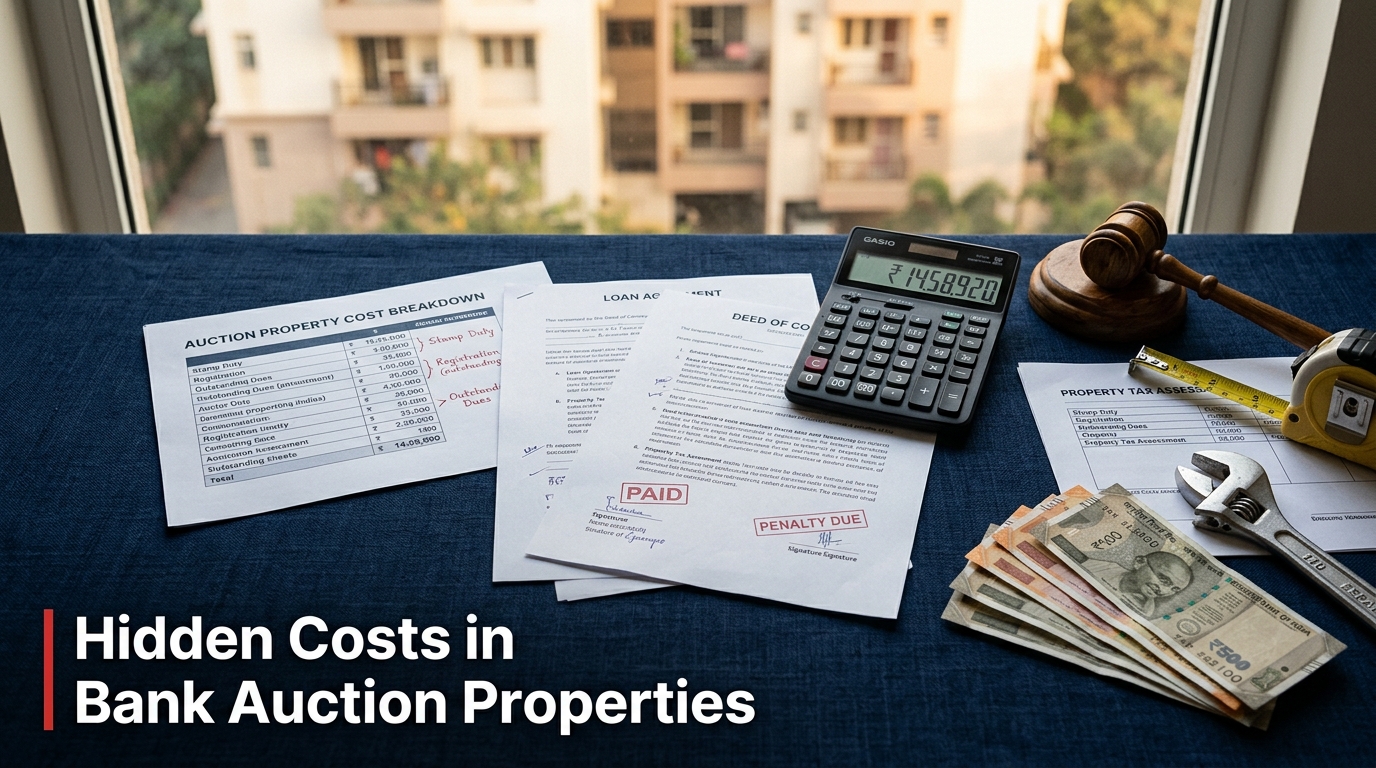
3. Hidden Dues and Liabilities
Banks mainly recover their loan amount through the auction process. However, certain unpaid dues may still exist on the property.
These may include:
- Property tax dues
- Society maintenance charges
- Electricity bills
- Water charges
- Municipal penalties
Before participating, buyers should verify whether additional liabilities are pending.
Ignoring hidden dues can significantly increase the total acquisition cost.
4. Limited Property Inspection
Some auction properties allow physical inspection only during specific dates mentioned in the auction notice.
In many situations:
- Internal access may be restricted
- Property condition may not be fully visible
- Structural problems may remain unnoticed
Without proper inspection, buyers may later face:
- Repair expenses
- Renovation costs
- Maintenance issues
Site inspection is an important part of due diligence before bidding.
5. Strict Payment Timelines
Bank auctions follow strict payment schedules.
After winning the bid, buyers usually need to:
- Pay a percentage immediately
- Complete remaining payment within a fixed timeline
Failure to complete payment may result in:
- EMD forfeiture
- Cancellation of allotment
- Financial penalties
Many buyers participate emotionally without arranging funds in advance, which becomes risky after winning the auction.
Financial preparation should always be completed before bidding.
6. Overbidding During Auction
Competitive bidding can sometimes push buyers beyond their planned budget.
Emotional bidding often leads to:
- Reduced investment value
- Higher financial burden
- Poor resale margin
Buyers should:
- Define maximum budget in advance
- Calculate additional expenses
- Avoid impulsive bidding decisions
A lower auction price does not automatically guarantee a profitable deal.
7. Delays in Ownership Transfer
Even after successful payment, certain administrative or legal processes may delay ownership transfer.
Possible delays may involve:
- Documentation procedures
- Registration formalities
- Possession handover
- Pending legal clearances
Buyers should understand that some auction properties may require additional time before complete transfer and usage.
How to Reduce Risks in Bank Auction Properties
Buyers can reduce risks significantly by following proper due diligence.
Important precautions include:
- Verify all legal documents
- Conduct property inspection
- Check possession status
- Review auction terms carefully
- Confirm total financial obligations
- Consult legal and financial experts if required
- Avoid bidding beyond budget
Careful planning is more important than finding the cheapest property.
Should You Avoid Bank Auction Properties?
Not necessarily.
Bank auction properties can still offer valuable opportunities for:
- Investors
- Homebuyers
- Commercial buyers
However, buyers should approach auctions with proper research and realistic expectations rather than focusing only on low prices.
The safest buyers are usually the ones who verify everything before participating.
Bank auction properties in India can provide attractive below-market opportunities, but they also involve important legal, financial, and possession-related risks. Buyers who ignore due diligence often face unexpected problems after purchase.
Understanding the major risks before participating in an auction can help buyers make smarter and safer investment decisions.
Platforms like AuctionNow help users explore verified bank auction property listings along with reserve prices, auction dates, and important property information across India.