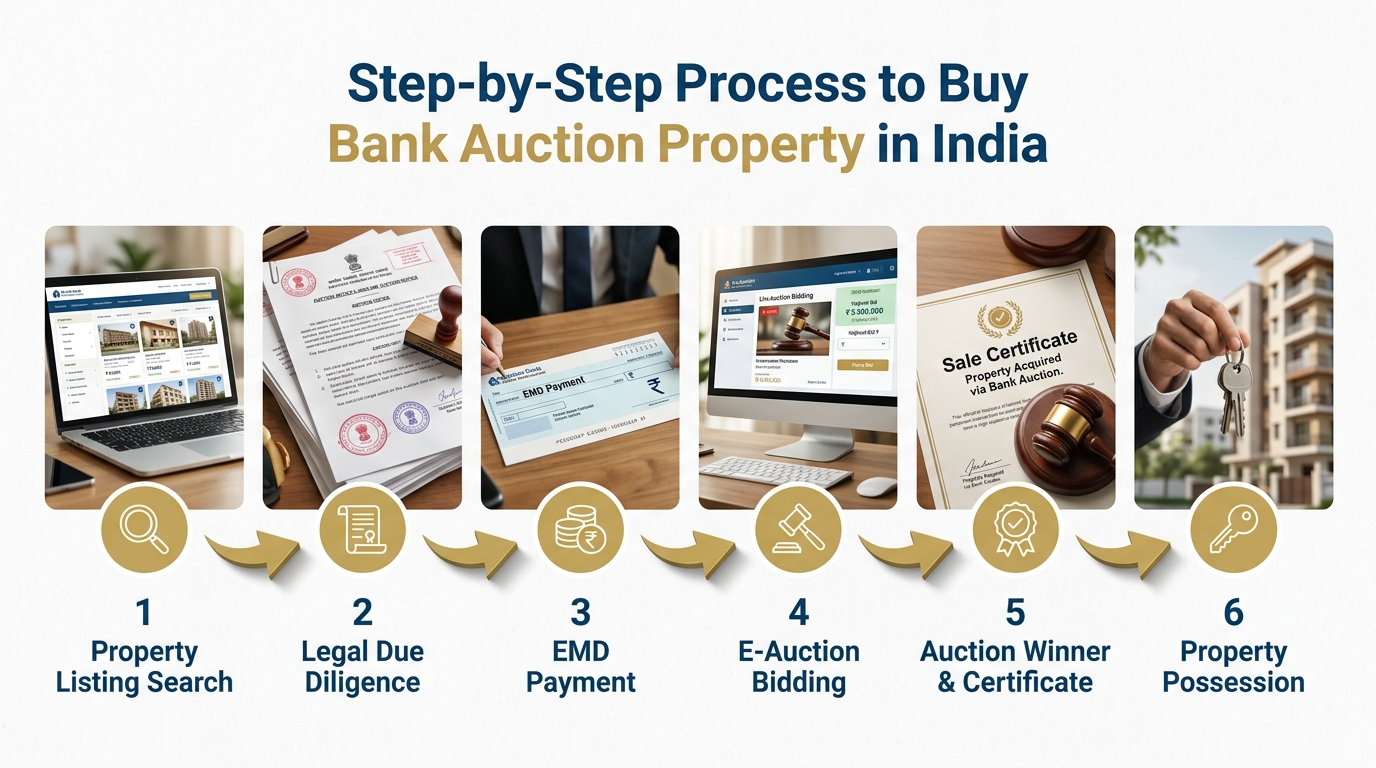
Bank auction properties are becoming increasingly popular among homebuyers and investors looking for properties at competitive prices. However, many buyers are unfamiliar with the actual auction process and often hesitate due to lack of information.
Understanding the complete process is important before participating in any bank auction property in India. Proper research, document verification, and financial planning can help buyers avoid unnecessary risks and make informed decisions.
This guide explains the complete step-by-step process to buy a bank auction property in India.
Step 1: Search for Bank Auction Properties
The first step is identifying suitable auction properties based on:
- Budget
- Property type
- Location
- Investment goals
Bank auction properties may include:
- Residential flats
- Independent houses
- Commercial properties
- Industrial units
- Land and plots
Buyers can explore auction listings through:
- Bank websites
- E-auction portals
- Newspaper notices
- Auction platforms like AuctionNow
While shortlisting properties, carefully review:
- Reserve price
- Auction date
- EMD amount
- Property location
- Possession status
Step 2: Read the Auction Notice Carefully
Every auction property includes an official auction notice published by the bank or financial institution.
The auction notice usually contains:
- Property description
- Reserve price
- Earnest Money Deposit (EMD)
- Bid increment amount
- Auction schedule
- Terms and conditions
- Contact details
Many buyers skip this step and later face issues due to misunderstanding auction conditions.
Always read the complete notice carefully before proceeding.
Step 3: Verify Legal Documents
This is one of the most important steps in the entire process.
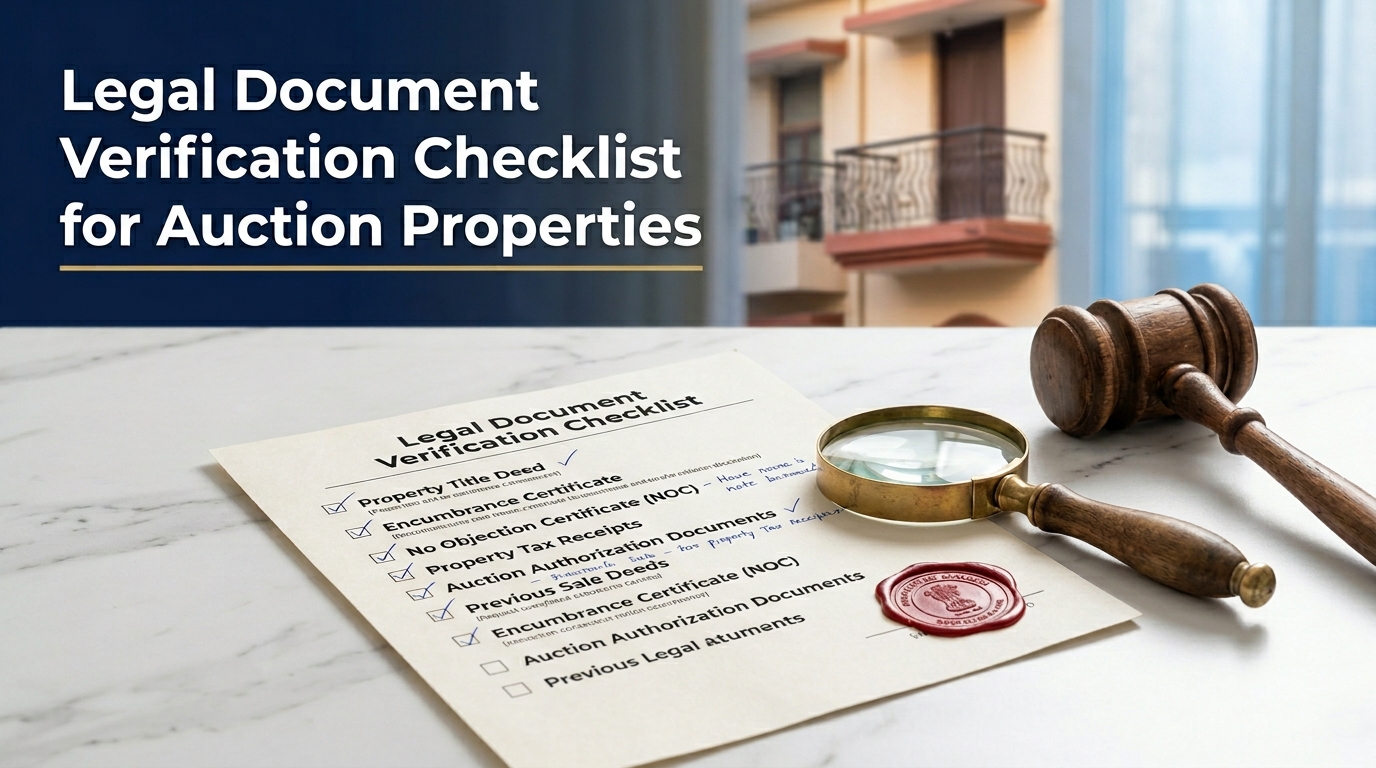
Before participating in the auction, buyers should independently verify:
- Property ownership
- Title documents
- Encumbrances
- Pending legal disputes
- Government approvals
- Possession status
Important documents may include:
- Sale notice
- Possession notice
- Encumbrance certificate
- Property tax receipts
- Approved plans
If required, consult a legal expert for proper due diligence.
Step 4: Inspect the Property
Whenever possible, physically inspect the property before bidding.
During inspection, check:
- Property condition
- Accessibility
- Occupancy status
- Water and electricity connections
- Structural issues
- Nearby infrastructure
Some auction properties may still be occupied by borrowers or tenants, so understanding possession status is important.
Step 5: Arrange Funds and Loan Eligibility
Bank auction purchases follow strict payment timelines.
Before bidding:
- Arrange available funds
- Check loan eligibility
- Confirm financing options with banks or NBFCs
Some banks provide loans for auction properties, but approval depends on:
- Property eligibility
- Documentation
- Buyer profile
Financial preparation is critical because delayed payments may result in penalties or EMD forfeiture.
Step 6: Pay the EMD (Earnest Money Deposit)
To participate in the auction, buyers must submit the Earnest Money Deposit (EMD).
The EMD amount is mentioned in the auction notice and is usually paid through:
- NEFT/RTGS
- Demand Draft (DD)
- Approved payment methods specified by the bank
Important points:
- EMD is mandatory for participation.
- EMD is refundable for unsuccessful bidders.
- Incorrect payment methods may result in disqualification.
Always verify payment details directly from the official auction notice.
Step 7: Register for the Auction
Most bank auctions in India are now conducted online through e-auction platforms.
Buyers may need to:
- Create bidder account
- Upload KYC documents
- Submit PAN and ID proof
- Complete registration formalities
After verification, eligible bidders receive access to participate in the auction.
Step 8: Participate in the Auction
On the auction date, registered bidders can place bids during the auction window.
Important points during bidding:
- Monitor bid increments carefully
- Avoid emotional overbidding
- Stick to predefined budget
- Understand extension rules if auction time increases
The highest eligible bidder above the reserve price usually wins the auction.
Step 9: Pay Remaining Amount
After winning the auction, the successful bidder must pay the remaining amount within the timeline specified by the bank.
Typically:
- A percentage is paid immediately after winning
- Remaining balance is paid within a fixed number of days
Failure to complete payment may result in:
- Cancellation of allotment
- EMD forfeiture
- Additional penalties
Step 10: Complete Documentation and Ownership Transfer
Once payment is completed, the bank issues:
- Sale certificate
- Transfer documents
- Possession-related paperwork
The buyer must then:
- Complete registration process
- Pay stamp duty and registration charges
- Update ownership records if required
After legal transfer, ownership is officially completed.
Common Mistakes Buyers Should Avoid
- Participating without legal verification
- Ignoring possession status
- Bidding emotionally beyond budget
- Missing payment deadlines
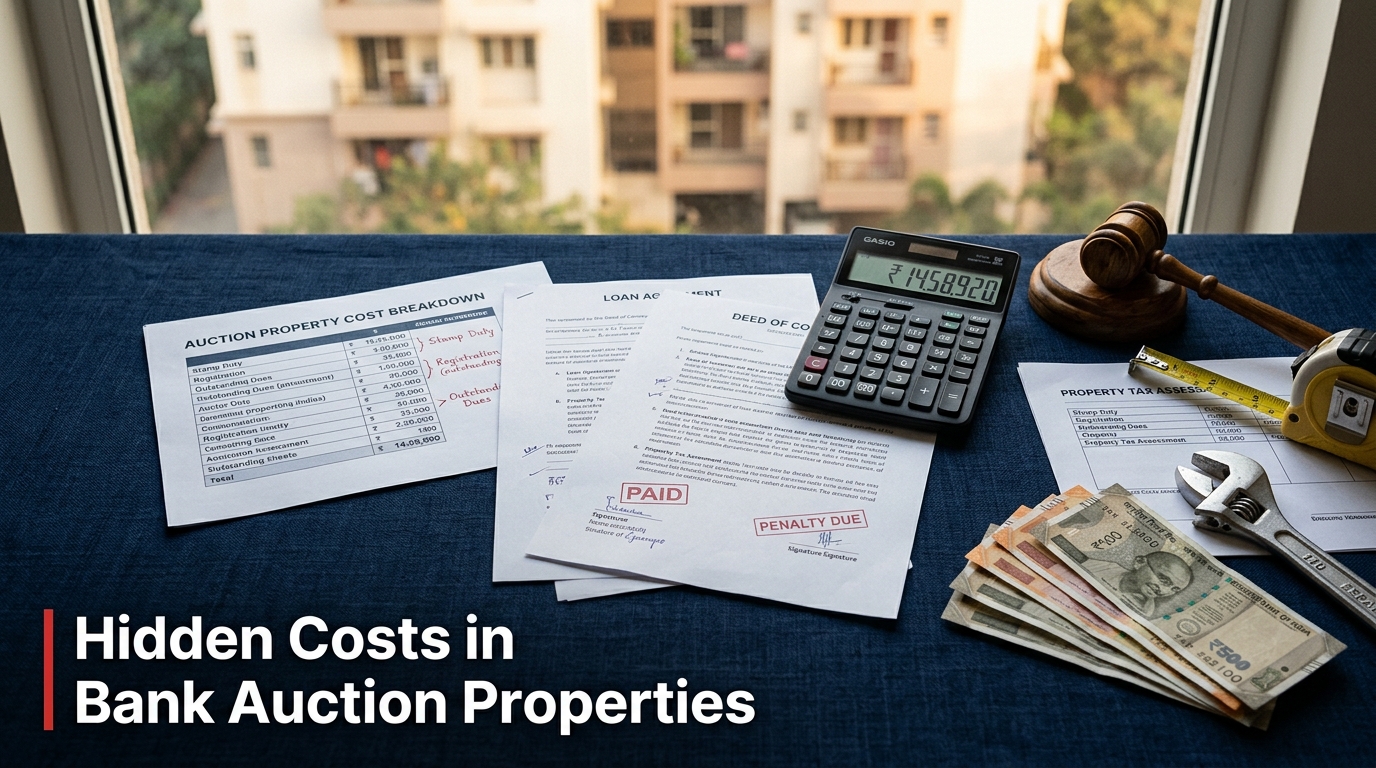
- Not checking hidden dues or liabilities
- Relying only on advertisements without reviewing official documents
Careful due diligence is essential before participating in any bank auction.
Important Terms You Should Know
- Reserve Price: The minimum price set by the bank for the auction.
- EMD (Earnest Money Deposit): A refundable deposit required to participate in the auction.
- SARFAESI Act: A legal framework allowing banks to recover bad loans through secured asset auctions.
- Auction Notice: Official document containing auction details, terms, and property information.
- Sale Certificate: Document issued to the successful bidder after payment completion.
Buying a bank auction property in India can be a valuable opportunity for homebuyers and investors looking for below-market property deals. However, success depends on proper research, legal verification, financial planning, and understanding the complete auction process.
By following the correct step-by-step approach, buyers can participate in bank auctions more confidently and reduce potential risks during the transaction process.
Platforms like AuctionNow help users discover verified bank auction properties along with reserve prices, auction dates, and important property information across India.