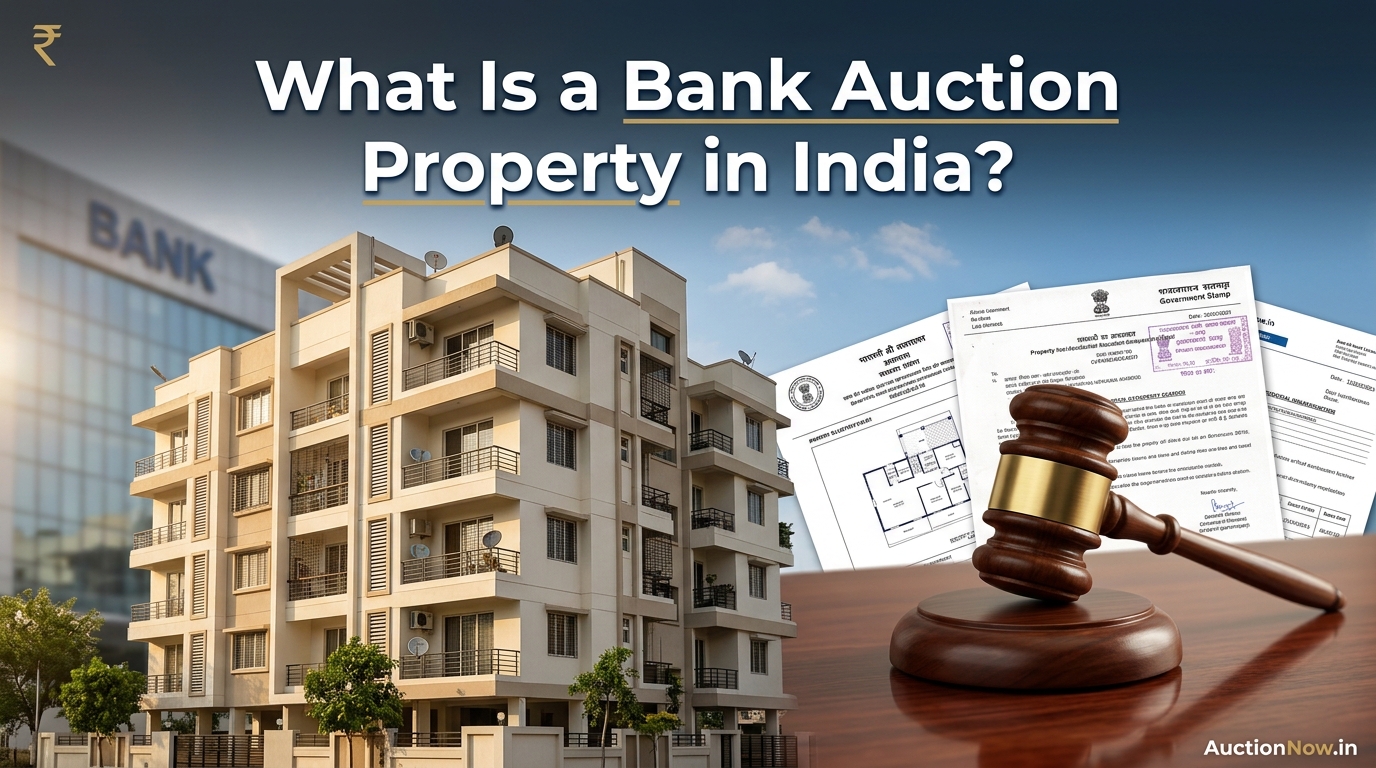
Bank auction properties are properties sold by banks or financial institutions to recover unpaid loans from borrowers. These auctions are conducted under legal frameworks such as the SARFAESI Act and are becoming increasingly popular among homebuyers and investors looking for properties below market price.
In India, bank auction properties can include:
- Residential flats
- Independent houses
- Commercial shops
- Offices
- Industrial properties
- Land and plots
These properties are usually auctioned through public bidding where the highest eligible bidder wins the property.
Why Do Banks Auction Properties?
When a borrower fails to repay a home loan or property loan for a long period, the bank classifies the account as a Non-Performing Asset (NPA).
To recover the outstanding loan amount, the bank takes possession of the secured property and auctions it publicly.
The purpose of the auction is:
- Recovery of unpaid dues
- Reduction of bad loans
- Faster asset liquidation
Banks do not aim to make profit from these auctions. Their primary goal is loan recovery, which is why many auction properties are available at prices lower than the market value.
How Does a Bank Auction Property Work?
1. Auction Notice Publication
The bank publishes an auction notice containing:
- Property details
- Reserve price
- Earnest Money Deposit (EMD)
- Auction date and time
- Terms and conditions
2. Document Verification
Interested buyers should review:
- Sale notice
- Legal documents
- Encumbrance details
- Property status
3. EMD Payment
To participate in the auction, bidders must submit the required Earnest Money Deposit (EMD).
The EMD amount is refundable to unsuccessful bidders.
4. Online or Physical Auction
Most modern bank auctions in India are conducted online through e-auction platforms.
Participants place bids during the auction window.
5. Highest Bidder Wins
If the highest bid meets the bank’s reserve price and conditions, the bidder wins the auction.
6. Final Payment and Ownership Transfer
The successful bidder must complete payment within the specified timeline after which ownership transfer procedures begin.
Benefits of Buying Bank Auction Properties
- Auction properties are often available below prevailing market prices.
- Banks publish auction terms, reserve prices, and bidding conditions publicly.
- Investors may find high-return opportunities in developing areas.
- Buyers can access residential, commercial, industrial, and land properties across multiple cities.
- The auction process is generally more transparent compared to informal property deals.
Risks of Bank Auction Properties
- Buyers should independently verify ownership, encumbrances, litigation status, and approvals.
- Some properties may still be occupied by previous owners or tenants.
- Property inspection availability depends on the bank and auction notice.
- Auction payments usually follow strict timelines.
- Failure to complete payment may result in EMD forfeiture.
Important Terms You Should Know
- Reserve Price: The minimum price set by the bank for the auction.
- EMD (Earnest Money Deposit): A refundable deposit required to participate in the auction.
- SARFAESI Act: A legal framework that allows banks to recover bad loans through secured asset auctions.
- Auction Notice: An official document published by the bank containing property details, auction terms, reserve price, and bidding conditions.
Can You Get a Loan for Bank Auction Property?
Yes, in many cases banks and financial institutions provide loans for auction properties.
However:
- Loan approval depends on property eligibility.
- Documentation verification is important.
- Buyers should confirm financing availability before bidding.
Should You Buy a Bank Auction Property?
Bank auction properties can be a good opportunity for:
- Investors
- Homebuyers
- Commercial buyers
especially when proper due diligence is completed.
Before participating:
- Verify all documents
- Understand auction terms
- Check possession status
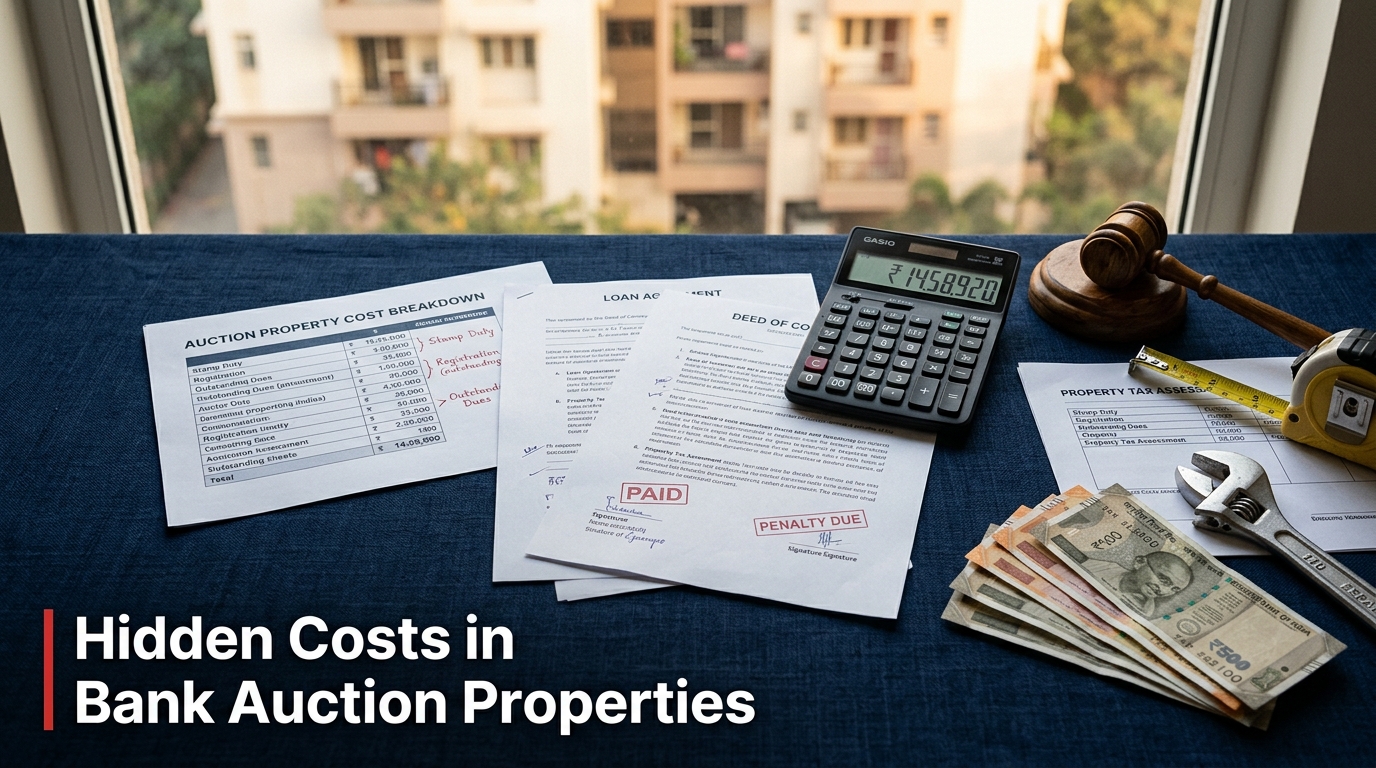
- Estimate additional costs
Careful research and legal verification are essential before making a final decision.
Bank auction properties in India are becoming an increasingly popular way to purchase residential and commercial properties at competitive prices. With proper verification and understanding of the auction process, buyers can explore opportunities that may offer significant value compared to regular market transactions.
Platforms like AuctionNow help users discover verified bank auction property listings along with reserve prices, auction dates, and legal information to make the auction process easier and more transparent.