Buying a bank auction property can be a good opportunity for homebuyers and investors looking for below-market property deals. However, one of the biggest mistakes buyers make is participating in auctions without properly verifying legal documents.
Even though banks auction properties under legal procedures, buyers should still conduct independent verification before bidding. Proper legal due diligence helps reduce the risk of ownership disputes, hidden liabilities, possession problems, and future legal complications.
This checklist explains the important legal documents buyers should verify before purchasing any auction property in India.
Why Legal Verification Is Important
Many buyers assume that auction properties are automatically free from all legal risks because they are sold by banks or financial institutions.
That assumption is dangerous.
Banks primarily focus on loan recovery and may not guarantee:
- Clear possession
- Encumbrance-free ownership
- Municipal compliance
- Property condition
- Future legal claims
Proper document verification helps buyers:
- Confirm ownership
- Identify legal disputes
- Detect pending liabilities
- Verify approvals and permissions
- Avoid future complications
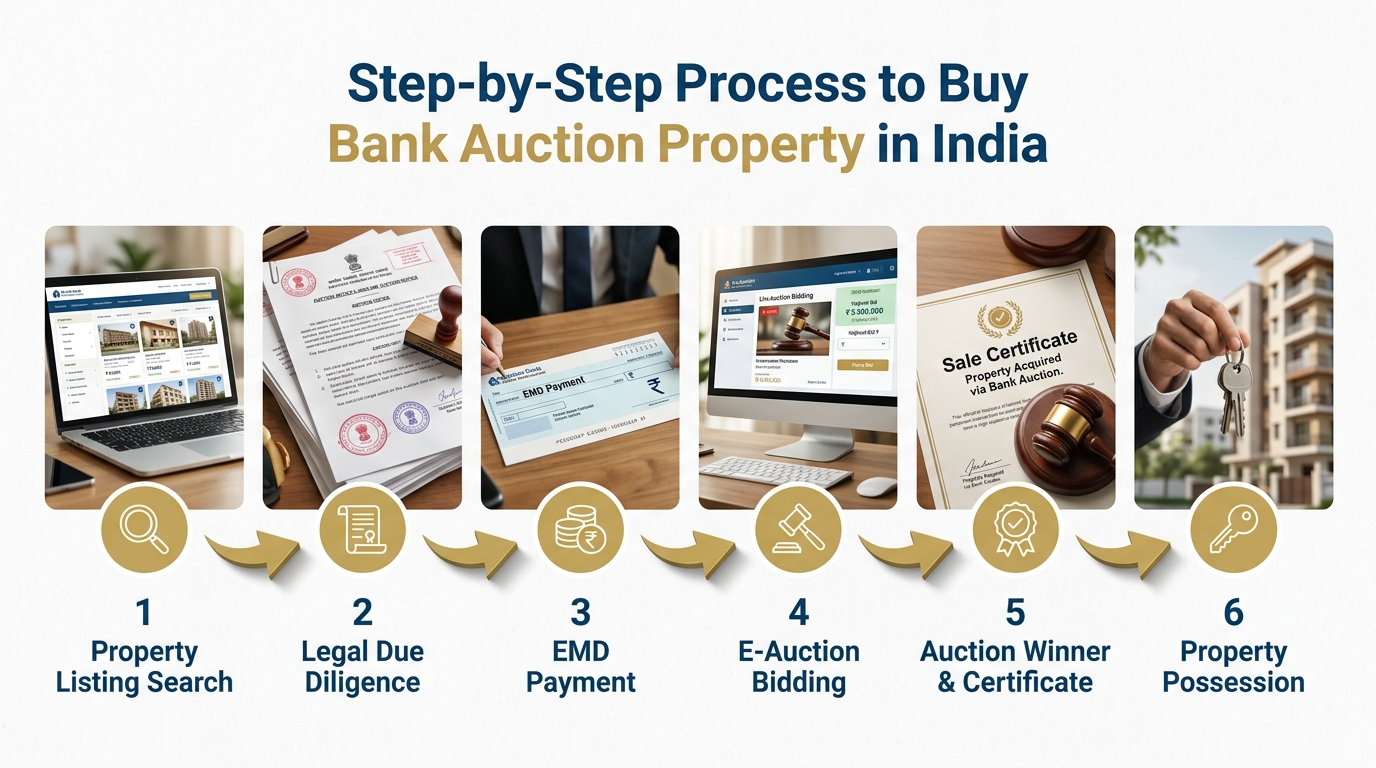
Legal verification should always be completed before paying the EMD or participating in the auction.
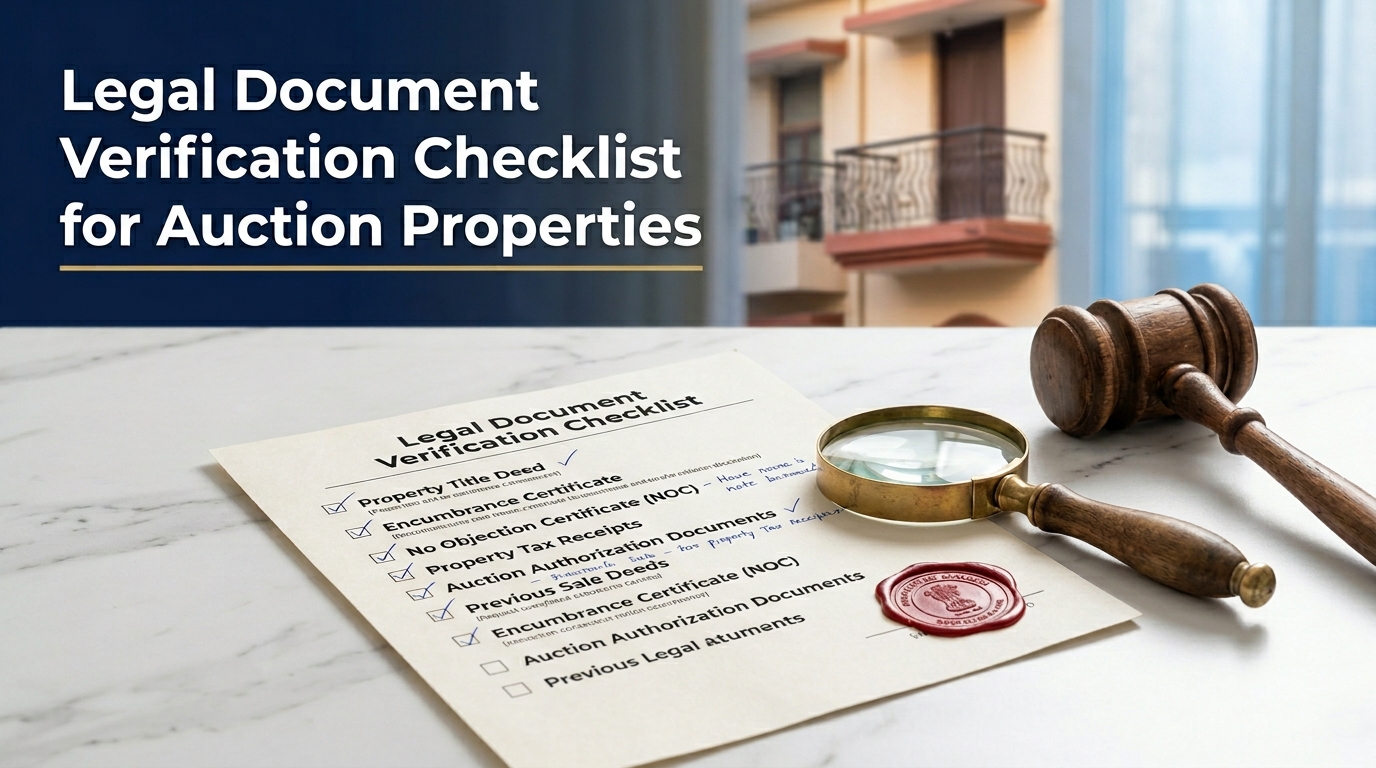
Important Legal Documents to Verify
1. Auction Notice
The auction notice is the primary document issued by the bank or NBFC.
It usually contains:
- Property description
- Reserve price
- EMD amount
- Auction date and time
- Terms and conditions
- Possession status
Buyers should carefully read the complete notice before participating in the auction.
2. Sale Notice
The sale notice contains detailed auction information published under applicable legal procedures.
Verify:
- Property details
- Loan recovery references
- Borrower information
- Applicable legal provisions
Ensure the property details match the actual property being auctioned.
3. Title Documents
Title verification is one of the most important checks.
Buyers should verify:
- Ownership chain
- Previous ownership history
- Title transfer records
- Property rights
Unclear or disputed title can create serious legal complications after purchase.
Consulting a property lawyer for title verification is strongly recommended.
4. Encumbrance Certificate (EC)
The Encumbrance Certificate helps identify:
- Existing loans
- Legal liabilities
- Financial claims
- Registered transactions
This document helps buyers understand whether the property has additional obligations beyond the bank auction process.
5. Possession Notice
The possession notice confirms whether the bank has taken symbolic or physical possession of the property.
Buyers should verify:
- Possession type
- Occupancy status
- Existing occupants or tenants
Possession-related disputes can significantly delay property usage after purchase.
6. Property Tax Receipts
Verify whether:
- Property taxes are paid
- Municipal dues are pending
- Penalties or arrears exist
Unpaid taxes may become the responsibility of the buyer after purchase.
7. Approved Building Plan
For flats, houses, and commercial properties, buyers should verify approved construction plans from the local authority.
Check:
- Building approval status
- Construction legality
- Floor plan approvals
- Unauthorized construction issues
Illegal construction may create future demolition or penalty risks.
8. Occupancy Certificate (OC)
The Occupancy Certificate confirms that the building complies with approved plans and is fit for occupancy.
This document is especially important for:
- Residential apartments
- Commercial buildings
- Newly constructed properties
9. Completion Certificate (CC)
The Completion Certificate confirms that the construction has been completed according to approved plans and local authority regulations.
Verify whether the certificate is properly issued by the relevant authority.
10. Society Dues and Maintenance Records
For apartments and gated communities, buyers should verify:
- Pending maintenance charges
- Society dues
- Common area liabilities
Outstanding dues may transfer to the new owner after purchase.
Additional Checks Buyers Should Perform
Apart from document verification, buyers should also:
- Physically inspect the property
- Verify locality and access
- Confirm utility connections
- Check pending litigation status
- Review court cases if applicable
Legal verification should not rely only on online information or auction advertisements.
Common Mistakes Buyers Should Avoid
- Participating without legal consultation
- Ignoring possession status
- Assuming bank auction guarantees clear title
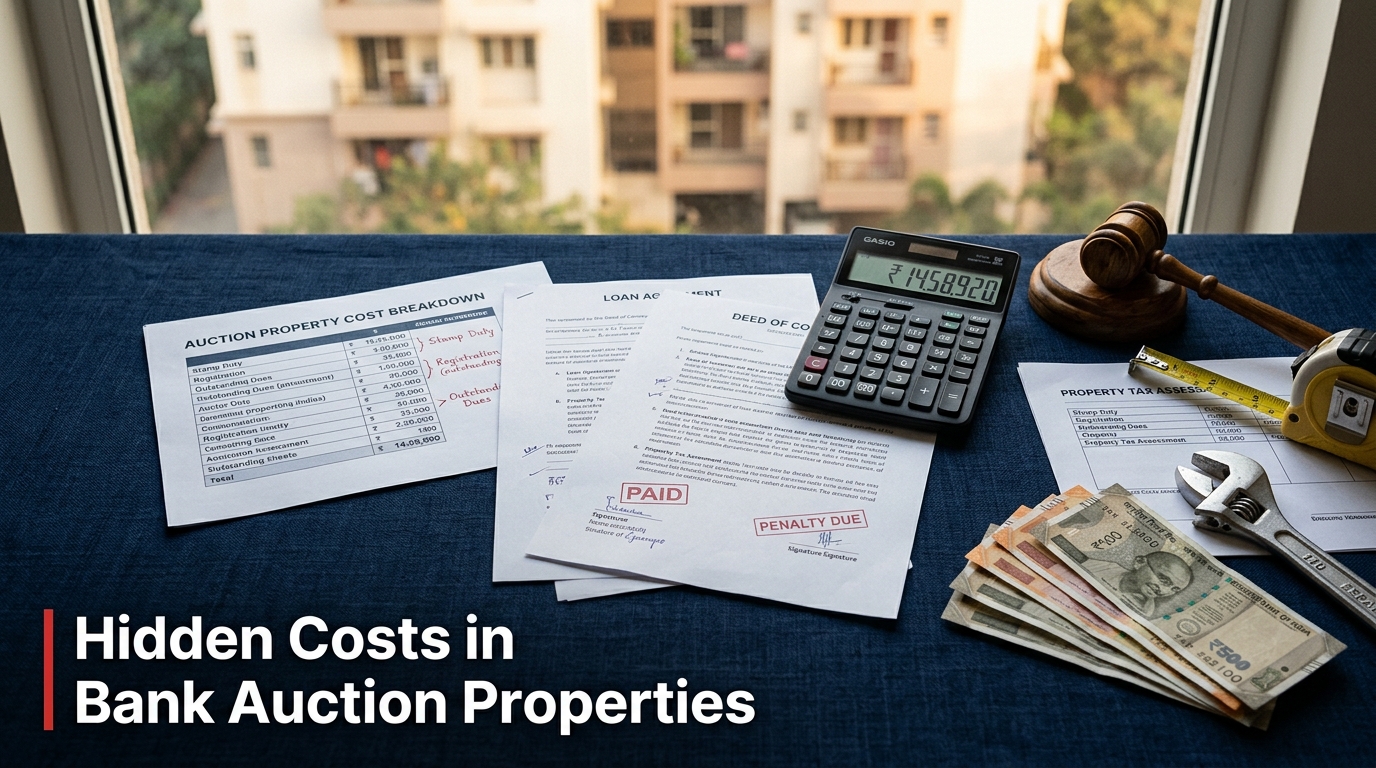
- Not checking hidden liabilities
- Skipping physical inspection
- Focusing only on low property price
A low auction price should never replace proper legal due diligence.
Legal verification is one of the most important steps when buying a bank auction property in India. Buyers who skip proper due diligence often face ownership disputes, possession problems, hidden liabilities, or financial losses after purchase.
Carefully reviewing all legal documents before participating in the auction can significantly reduce risks and help buyers make safer investment decisions.
Platforms like AuctionNow help users explore verified bank auction properties along with auction notices, reserve prices, legal details, and important property information across India.