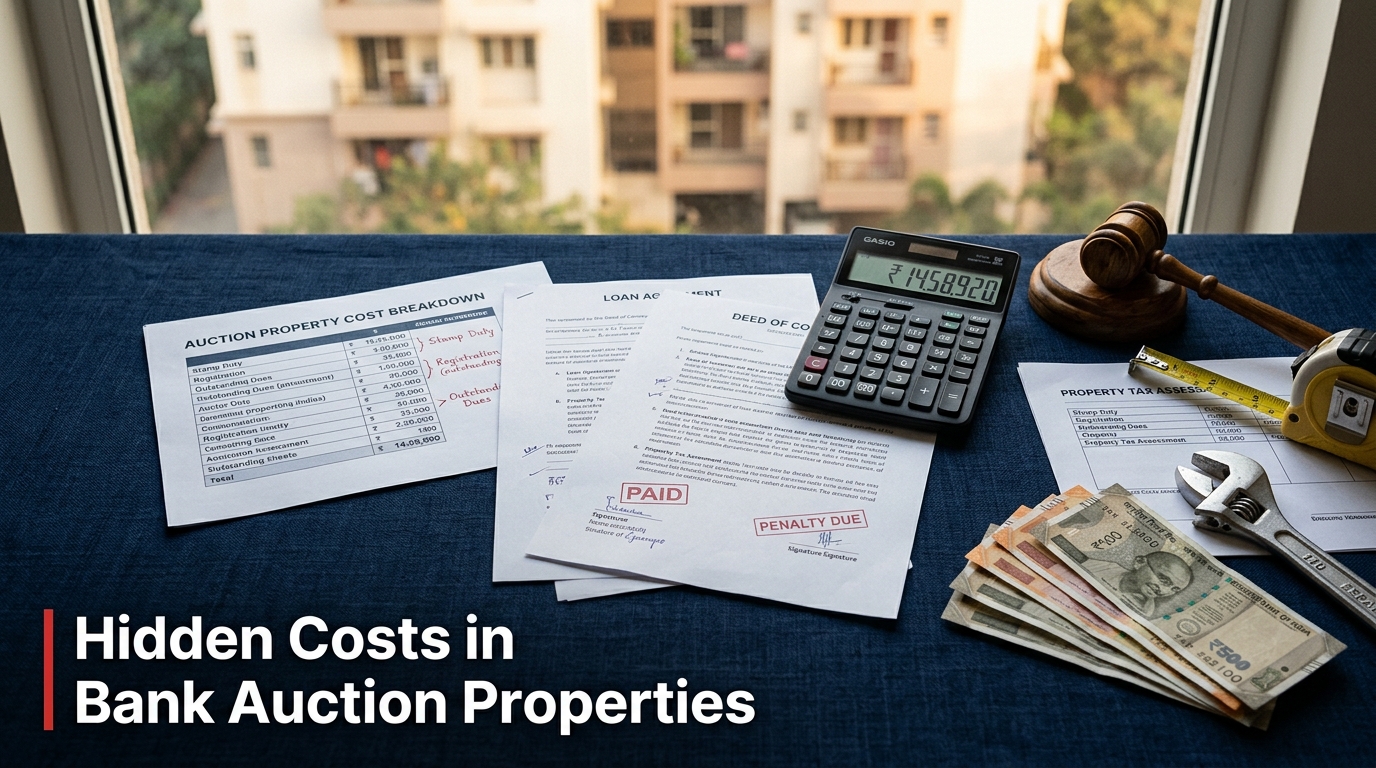
Many buyers are attracted to bank auction properties because they are often available below market price. However, one of the biggest mistakes buyers make is focusing only on the reserve price while ignoring additional expenses involved in the purchase process.
A bank auction property may appear inexpensive initially, but the total acquisition cost can increase significantly after including taxes, legal expenses, pending dues, repairs, registration charges, and other liabilities.
Understanding the complete expense breakdown before bidding helps buyers avoid financial surprises and make better investment decisions.
Why Buyers Often Miscalculate Auction Property Costs
Many first-time buyers assume:
- Reserve price is the final property cost
- Banks clear all pending liabilities
- No additional charges exist after winning the auction
In reality, several hidden or indirect costs may apply depending on:
- Property condition
- Possession status
- Pending dues
- Legal complications
- Local authority charges
Ignoring these expenses can turn a good-looking deal into a financial burden.
1. Earnest Money Deposit (EMD)
Before participating in the auction, buyers must submit the Earnest Money Deposit (EMD).
Important points:
- EMD is mandatory for bidding participation.
- EMD is refundable for unsuccessful bidders.
- EMD amount varies based on the property value.
However, if the successful bidder fails to complete payment within the specified timeline, the EMD may be forfeited.
Buyers should participate only after proper financial preparation.
2. Stamp Duty and Registration Charges
Winning the auction does not eliminate government registration costs.
Buyers must still pay:
- Stamp duty
- Registration fees
- Documentation charges
These charges vary by:
- State
- Property value
- Property type
In many cases, these expenses can become a significant percentage of the total property cost.
3. Pending Property Tax Dues
Some auction properties may have unpaid municipal taxes pending from the previous owner.
Buyers should verify:
- Property tax status
- Penalties
- Municipal arrears
Outstanding dues may become the responsibility of the new buyer after ownership transfer.
4. Society Maintenance Charges
For apartments and gated communities, unpaid maintenance dues may exist.
These may include:
- Society maintenance charges
- Sinking fund contributions
- Parking charges
- Common area expenses
Buyers should confirm pending society liabilities before participating in the auction.
5. Electricity and Water Bill Arrears
In some cases, unpaid utility bills remain attached to the property.
Verify:
- Electricity bill status
- Water connection dues
- Utility penalties
Reconnection or settlement charges may apply before services are restored.
6. Legal Verification Expenses
Proper legal due diligence is strongly recommended before purchasing any auction property.
Buyers may need to pay for:
- Legal consultation
- Title verification
- Document review
- Encumbrance checks
Skipping legal verification to save money often creates bigger financial risks later.
7. Property Repair and Renovation Costs
Auction properties are often sold on an “as-is” basis.
Some properties may require:
- Structural repairs
- Interior renovation
- Plumbing work
- Electrical repairs
- Cleaning and maintenance
Physical inspection is important before estimating renovation costs.
8. Possession-Related Expenses
If the property is occupied by:
- Previous owners
- Tenants
- Unauthorized occupants
buyers may face:
- Legal expenses
- Eviction costs
- Delays in possession
Possession-related issues can increase both financial and time-related costs.
9. Loan Processing and Financing Charges
If buyers take a loan for the auction property, additional charges may apply.
These may include:
- Processing fees
- Legal charges
- Valuation fees
- Insurance costs
- Documentation charges
Loan eligibility also depends on the property and auction conditions.
10. Miscellaneous Administrative Costs
Additional expenses may include:
- Notary charges
- Affidavit costs
- Documentation expenses
- Brokerage or consultant fees if applicable
While individually smaller, these costs collectively increase the final acquisition amount.
How to Estimate the Real Cost of an Auction Property
Before bidding, buyers should calculate:
- Reserve price
- Registration costs
- Pending liabilities
- Legal expenses
- Repair estimates
- Possession-related risks
- Loan-related charges
A proper total cost estimate helps buyers avoid emotional bidding and financial stress later.
Common Mistakes Buyers Should Avoid
- Assuming reserve price is the final cost
- Ignoring pending dues
- Skipping legal verification
- Underestimating renovation expenses
- Participating without financial planning
- Ignoring possession risks
A low auction price does not always mean a profitable purchase.
Bank auction properties can offer attractive investment opportunities, but buyers should never evaluate a property based only on the reserve price. Several hidden and indirect expenses may significantly increase the total acquisition cost after purchase.
Understanding the complete expense breakdown before participating in the auction helps buyers make smarter financial decisions and reduce unexpected risks during the property buying process.
Platforms like AuctionNow help users explore verified bank auction properties along with reserve prices, auction details, legal information, and important property notices across India.